


Earlier this month, the ADL released its State of the Arts report, a sweeping investigation into what it describes as the “systemic exclusion and marginalization of Jewish and Israeli artists across American cultural life.”
It highlights the growing discrimination towards Jews in all facets of the arts.
Even Jerry Seinfeld has become the target of an organized campaign demanding the cancellation of his D.C. performances over his support for Israel.
Of the 40 major museums evaluated, nearly a third received failing marks for Jewish inclusion and representation.
The findings are disturbing, though they didn’t come as much of a surprise to me. I first noticed something unsettling about the treatment of Jewish art this summer while visiting London.
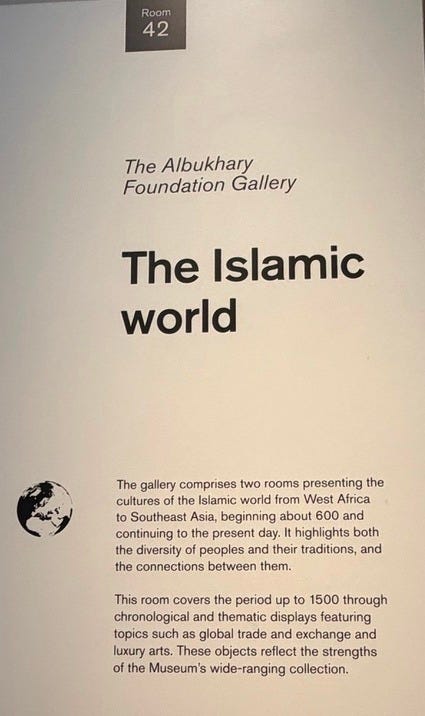
In July, I spent an afternoon at the British Museum, which, despite its name, is not a museum of British history but a sprawling gallery of human civilization. Its collection spans 2 million years, yet as I wandered through the exhibitions, I noticed something peculiar: Judaism was nowhere to be found. The lack of Jewish artifacts seemed strange for a museum that has eight million objects including two massive rooms dedicated to Islam.
Naturally, I did what any serious student of history would do in the year 2026 and asked ChatGPT where the Jews were.
It directed me to Room 46, Europe 1400–1800, on the upper floor, specifically Display Case 23.
Reader, I kid you not, the entire Jewish exhibit was reduced to a tiny glass case with a couple shofars and some forgettable Judaica. Basically, the jewish artifacts were an afterthought of scraps.
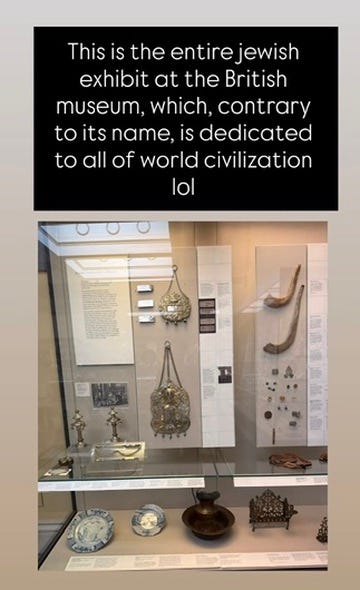
To their credit though, the fine print does offer some important historical context—if you could manage to read it.
The signage said:
Jews had been expelled from England in 1290 and were not permitted to return until 1656 under Oliver Cromwell. Jewish communities became established in London and in other towns and cities. The first community to settle in Britain were Sephardim, descended from Jews who had been expelled from Spain and Portugal. Jews from central and eastern Europe, known as Ashkenazim, also settled.
The first Ashkenazi synagogue was established in Aldgate, in the City of London, in the 1690s.
The earliest purpose-built Sephardi synagogue in London, in Bevis Marks, was completed in 1701 and is still in use today.
Oddly enough, the British Museum does have an old Israeli credit card on display.

Now, on to the Islamic rooms which look like they’re out of the palace from Beauty and the Beast.
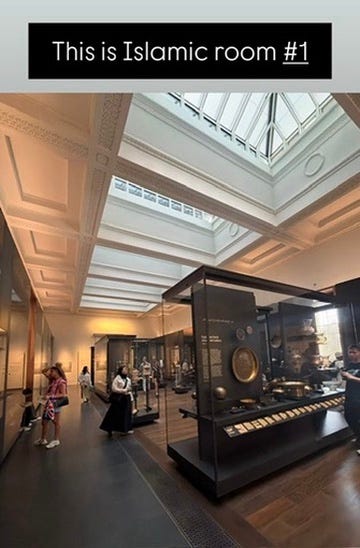
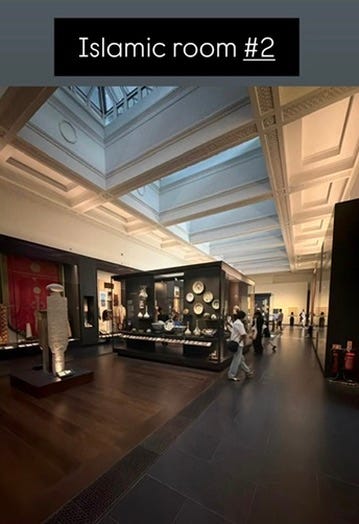
Crazy to think the minimization of Jewish culture is happening in London, home to one of the largest Jewish communities in the world outside Israel and the United States.
I’m not suggesting some nefarious curator deliberately shoved the Jews into a corner, cackling maniacally as he flushed a dreidel down the toilet. But it’s unsettling how easily Jewish history can be erased.
And the fun didn't stop there!
Around the block from the museum I stopped by the London Review Bookshop, one of the city’s most celebrated independent bookstores, and found something equally bewildering. In its Middle East section, I counted exactly ZERO books offering an Israeli perspective on Israel’s history. Plenty about Palestine, though. Apparently, one side of the world’s most obsessively debated conflict had been granted exclusive rights to the bookshelf. I guess that’s what you call a one-shelf solution.
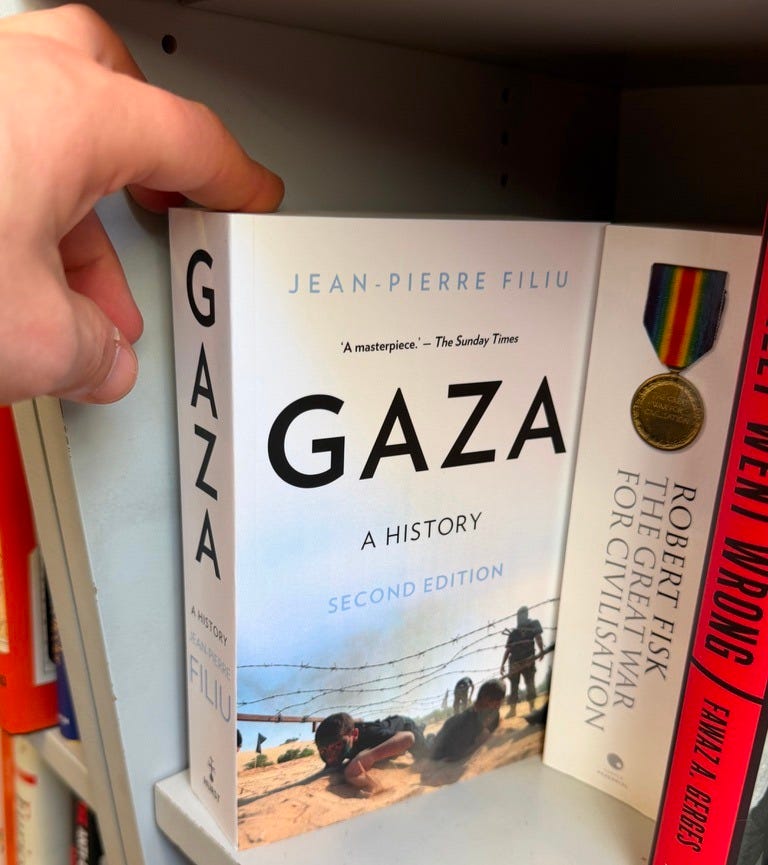
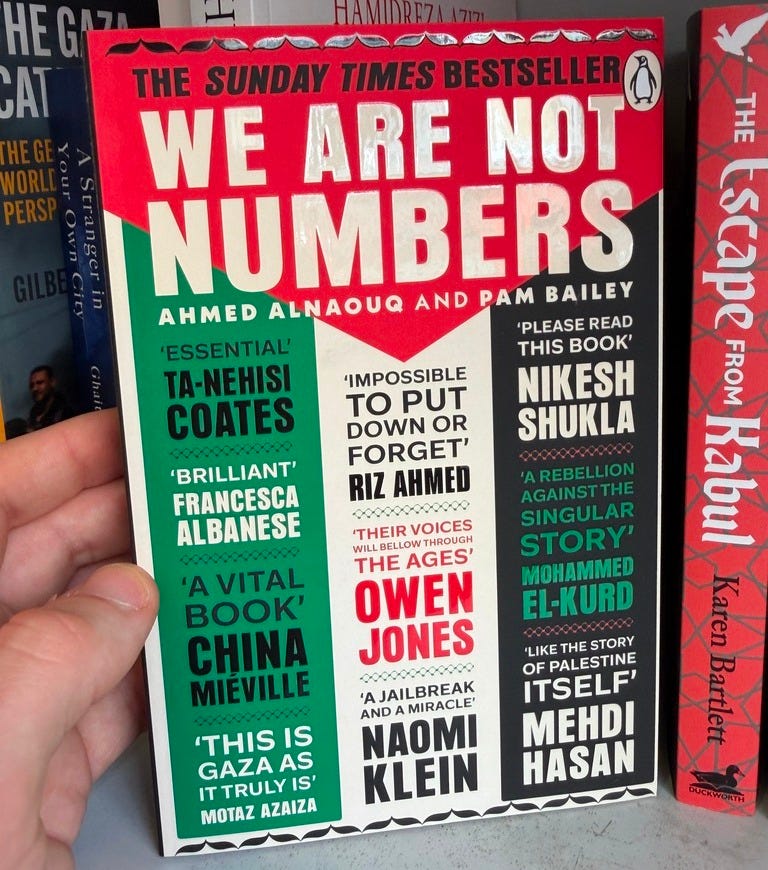
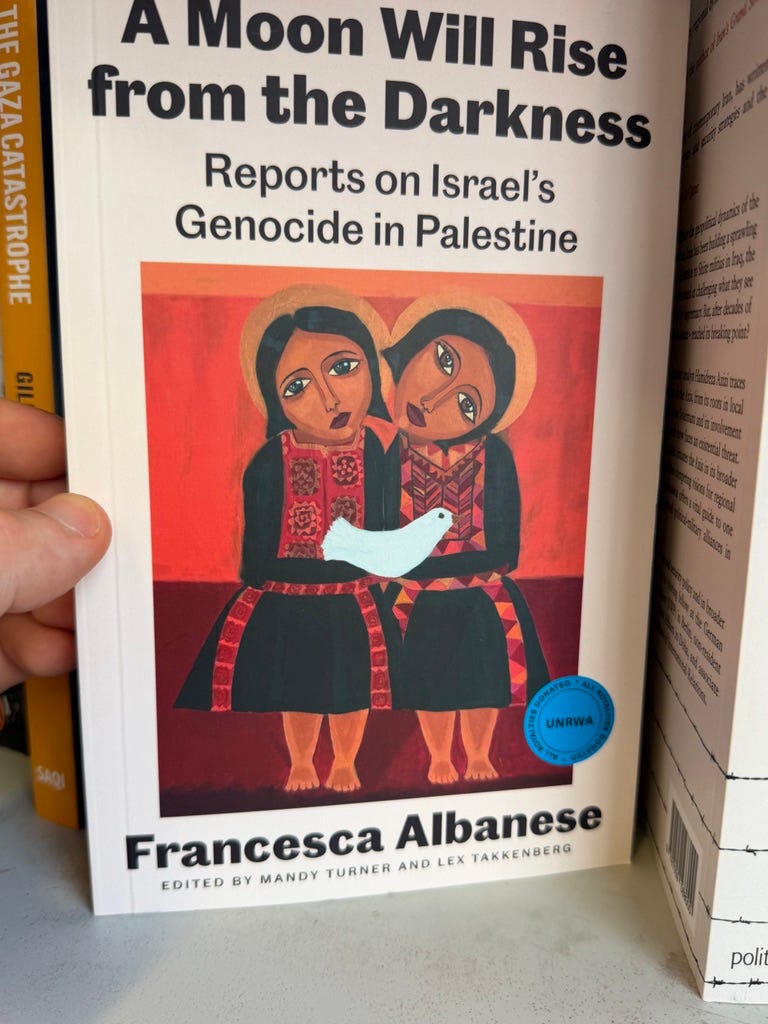
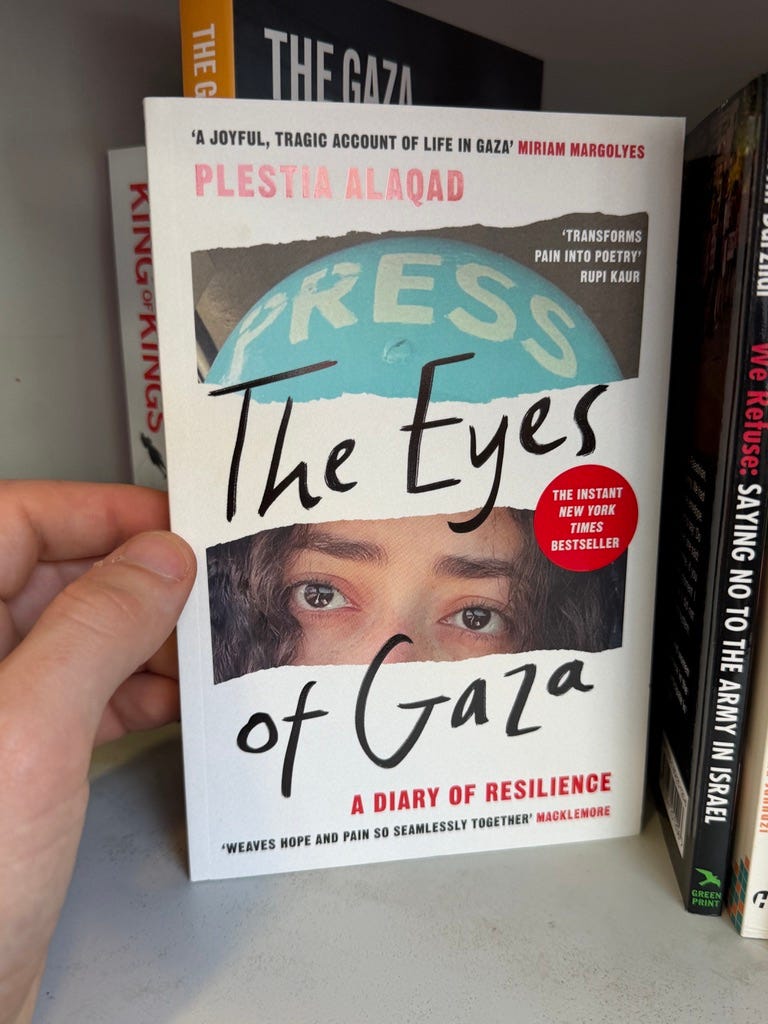
I completely understand a bookstore stocking more books about Palestine than Israel. It’s a business, after all, and Israel’s PR is somewhere in the seventh circle of hell. I get it. Supply and demand. Capitalism. Slay. But not a single Israeli perspective? To not even carry Eli Sharabi’s hostage memoir about surviving 491 days in Hamas captivity is a glaring omission. The man’s wife was British, for god’s sake.
I’m not calling for equal shelf space for Israeli books. There should at least be a couple though. Instead, the London bookshop doesn’t even offer a crumb of intellectual diversity. To have none is deliberate censorship. When a bookstore devoted to literature and intellectual inquiry presents a conflict almost entirely through one national narrative, readers aren’t being invited to understand its complexity.
Anyway, that’s enough of my rant. If you visit London, let me know if you encounter any other weird shit. Like Paddington Bear handing out Mein Kampf, or Mary Poppins explaining in song how the Jews caused Brexit.
For what it’s worth, Matilda would NEVER tolerate this literary censorship. We stan a book nerd with principles.
"One-shelf solution," indeed.
The world has gone mad because Islam is pursuing its widely stated aim of claiming all of it for Allah, and most of the rest of us are meekly letting it happen. More fool us. Doesn't make it real though. Tiny Israel prevails. I so pray for some gumption from the rest of us.